Tuesday, October 25, 2022

Brownfield ag article

Michigan dairy farmers are working to increase access to milk and dairy foods at local food pantries.

Kris Wardin serves on the United Dairy Industry of Michigan board of directors.

“It is one of the most requested food bank items, we just haven’t had necessarily the logistics to be able to get it there, but that has really changed over the past several years,” he says.

The St. Johns dairy farmer tells Brownfield new check-off funded grant programs allow food pantries to purchase dairy foods and also improve their distribution process.

“It’s really a program I think our dairy farmers can feel very proud of, they can feel really good about it, and I think from our feedback from our partners at the food bank, they’re so very appreciative of it,” he shares.

The program has placed more than 60 coolers in local food pantries and awarded 10 infrastructure grants and 25 dairy food grants over the past two years.

Wardin says other food security projects have provided six of the seven major food banks in the state with dedicated refrigerated trucks to help distribute dairy.

He also points to milk drives with partner organizations like Busch’s Fresh Market and Spartan Nash stores to help increase milk donations to pantries.

Listen here.

Monday, September 19, 2022

Running


Alice Murphy sent me this clip yesterday. I've seen it before, but not in a long time. This is my grandma Caroline Anderson, who had five children, then taught elementary school to put her children through college, all while dairy farming with my grandpa, Dale. 

I was lucky enough to have my grandma until I was 15 years old, and since she lived so close, she was part of my daily life. I can't say enough good things about her, since she came to everything we did, was funny and nice, did the hula dance at an event and taught me too, always was delighted to spend time with us, and made my childhood pretty magical. 

A salute to one of the people that made our farm what it is today!

Corn is done!


Breathe a sigh of relief...the corn silage is done! 

We hire Eric Miles and his team to do our chopping now. Eric very kindly sent me a video from the seat of the chopper, because I do miss riding with Kris (plus the boys) and watching it all happen! I don't miss owning a chopper and wagons. Eric and his team do an awesome job.

Our team also was great as always, and our supplementary team of our neighbors (not pictured) and friends (most but not all pictured) who helped us cover the piles!

This is such a big deal every year. All the eagerness to plant, all the hoping for rain, all the concern about it all summer long...then the payoff of a (hopefully) good harvest to feed our cattle!

It didn't rain much here, so our corn crop was not quite as good as some years, so we're buying some beet pulp we also will store on the cement pad.

Monday, September 5, 2022

End of summer


Don't you think it's interesting when a child follows in a parent's footsteps?

Obviously this happens a lot in agriculture. Although we are on my family's farm, Kris also comes from a long line of farmers. Here he is with his dad Mike, who delivered bales this week.

I like asking people who I think have great jobs if they would recommend it to their kids...and often the answer is no.

Do you want your kids to follow in your career footsteps?

(Zero of my kids seem inclined to be either farmers OR marketing writers. But there's time!)

~

Also - there's the beauty of the cows and pasture...and the beauty of technology and machinery! 

1. Manure haulers to fertilize our fields, this week after we chopped alfalfa. Thanks guys!

2. This keeps algae and residue from clogging up the irrigation pipe. We used to have to clean it out by hand once or twice a day. 

3. The irrigation system that keeps our pastures and crops hydrated during this pretty dry summer!


We're getting ready for harvesting corn. It's kind of short due to the lack of rain, but it still looks good. The kids are back in school, I'm working, and we're all readying (and honestly, ready) for cold weather! 

Thursday, August 25, 2022

Down on the farm


Ah, it's been an exciting summer on the farm. Good things, bad things, in between things. Lots of tours, friends, family, employees, parties, meetings, and work. Kris is on two boards and he really enjoys going to their meetings, the other people, and being involved. Our employees are wonderful, and we're fortunate they work here. I've been spending a lot of time at my computer at my job, which is currently in a different industry, which is why I haven't been posting any dairy articles!

The new alfalfa just started peeking out of the ground, and we're getting ramped up for corn harvest. Get ready for a tire party!  

Friday, July 22, 2022

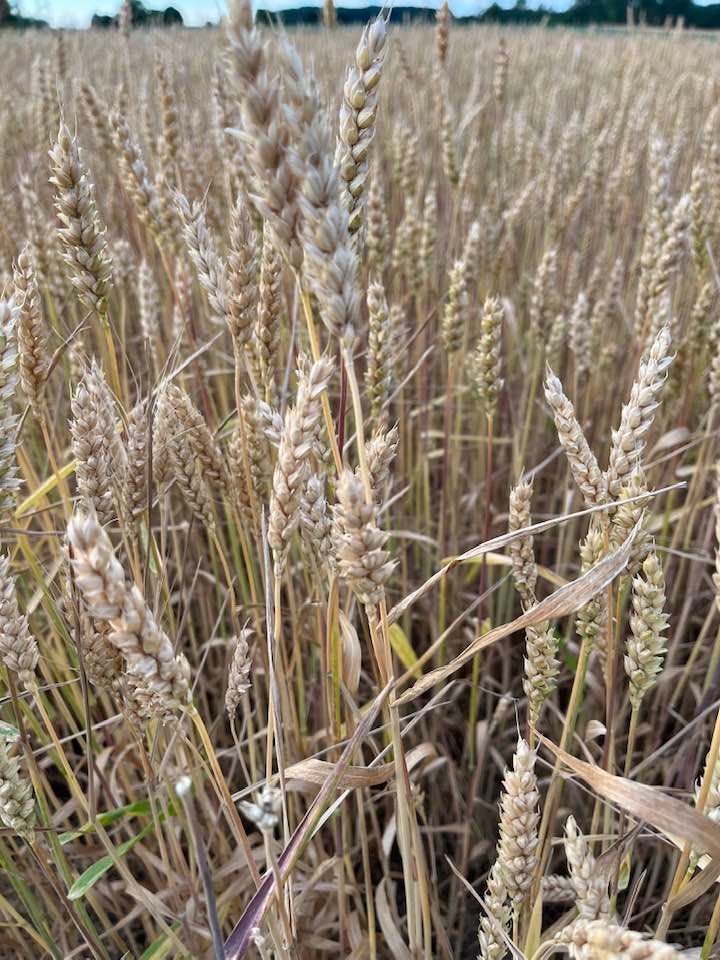
Now wheat!


My mom, Cherie Anderson, has done it again!  This time it's on wheat. We don't grow wheat on our farm, but we do buy a lot of it to bed down our cattle. I love looking at it when it's growing and when it's in bales in the field. It's just so beautiful. A friend of mine just had her niece's senior pictures taken in Greece, and in them she's standing in front of ... wheat! Beautiful in any country! Here's what my mom wrote:

~

The farmers around here have been harvesting their wheat for about the past week. Wheat is a cereal grain in the grass family. Most of the wheat planted around here is winter wheat and it’s planted about the first week of October. When it comes up, it looks like a field of grass and is a very pretty color of green. When the cold comes, the wheat just sits there and it survives all through the winter weather. In fact, it’s desirable to have snow cover the crop as insulation. In the spring, it begins to grow again and as it ripens in July, it turns a beautiful golden color. You know, “amber waves of grain”.  

Wheat is harvested with a combine. The combine cuts the plants off and separates the kernels of wheat from the chaff. The last photos show what comes out and is put into the truck or wagon. 

Wheat is almost like two crops in one, as the combine can shoot all the stems of the wheat out onto the ground and then the farmer can bale all of that straw up. If he doesn’t have livestock, he can sell all the straw to farmers who do. It is used for nice, soft, clean bedding for the animals. The straw can be baled  into big square bales, small square bales, or big round bales, just like hay is. 

Wheat is a cash crop, not generally raised for animal feed. The farmer can harvest the wheat and sell it that day for the current market price; he can store it and sell it when he wants to; or many farmers sign a contract ahead of time for a certain number of bushels at a certain price. This happens to be a good year to have wheat to sell!


Wednesday, June 29, 2022

Alfalfa - the process!

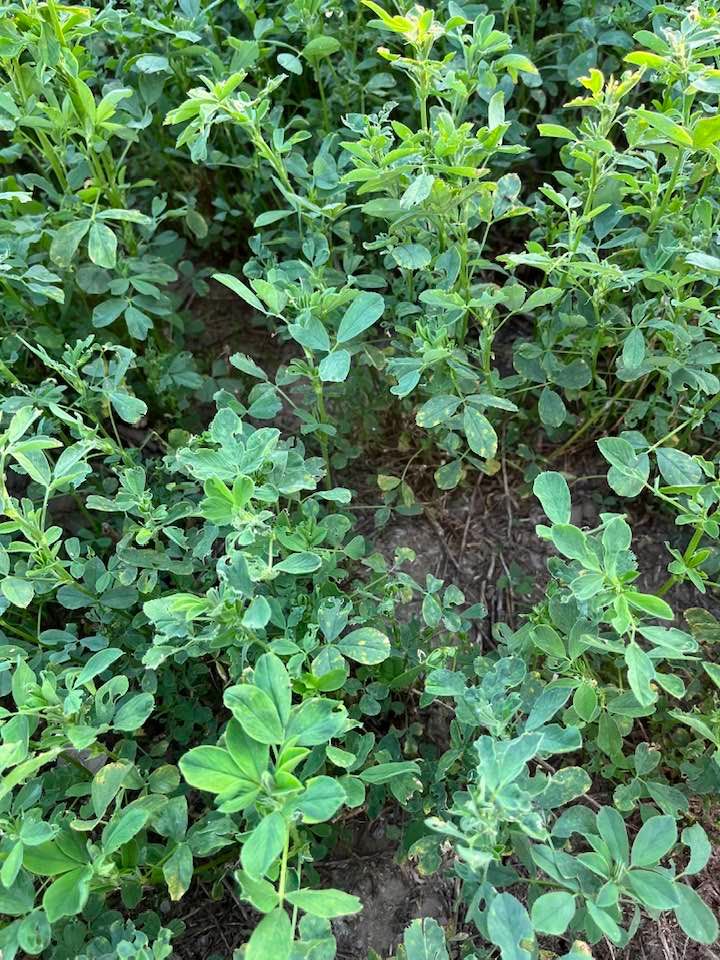
A beautiful field of aflalfa


My mom Cherie Anderson wrote this on her Facebook page, and since she described it so well, I'm going to use it here! She also took all the pictures. Even though I grew up here, I didn't really pay attention until we started farming here ourselves. Growing and harvesting alfalfa to feed our cattle is a summer-long process with rewarding results! 

~

It’s haying time in Michigan. Everyone knows what hay is, but maybe not everyone knows the process. This is a field of alfalfa. Alfalfa is planted in late summer or early fall to use the following spring. It’s a high protein food for cattle. It’s a legume and has deep roots. A field will be good for three to five years, or even longer, depending on the weather and soil. 

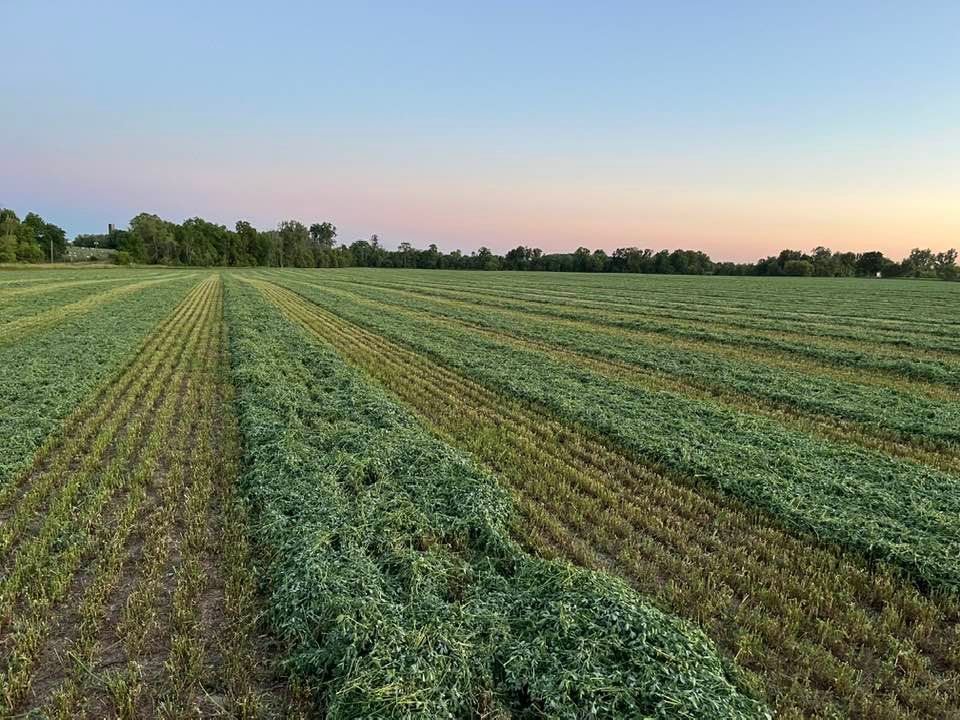
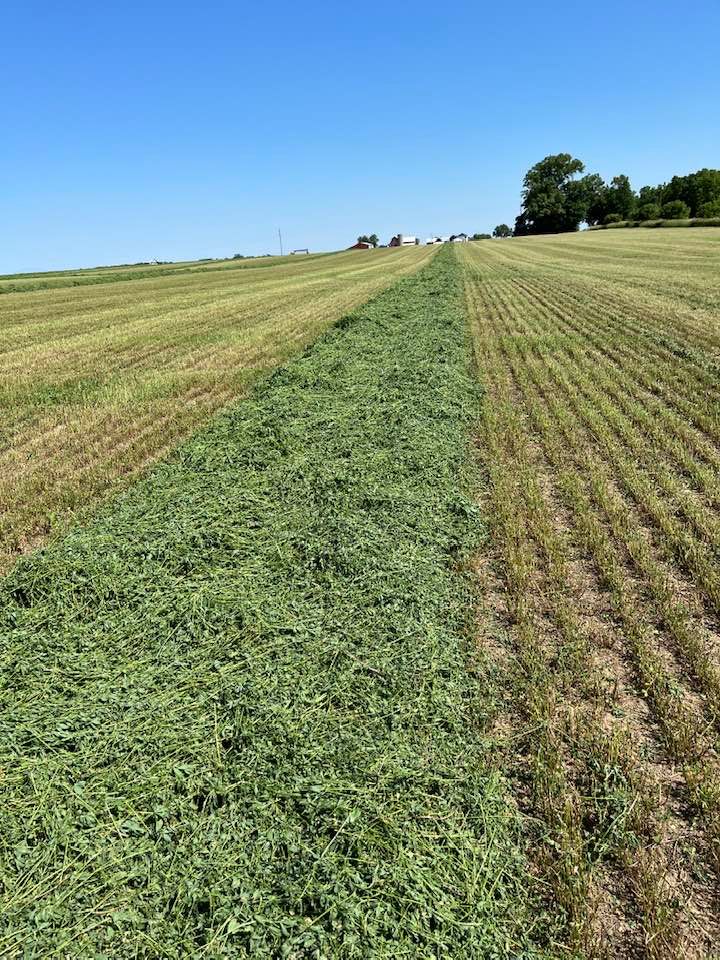
When the alfalfa is at the right maturity and there’s no rain imminent, the farmer mows it and the machine lays it in rows. Then a rake or merger will put those rows together into larger swaths, or windrows. Then a chopper will scoop up those rows, cutting the alfalfa into smaller pieces and shooting it into a wagon or truck which is driving alongside. It’s trucked to a cement pad, dumped out, and another tractor pushes it into a pile and drives over it, compacting the pile. When it’s all done, the pile is covered with plastic. The alfalfa ferments, does not rot or spoil, and makes nutritious, delicious feed for cows for later on. It’s called haylage. 

You can also bale alfalfa into round or square bales. In that case, it has to be much drier than chopped alfalfa. You can’t bale wet hay. It can actually spontaneously combust, as crazy as that sounds. 

Alfalfa is mixed with corn sileage and other feeds and fed to cattle. Hay for horses is generally not purely alfalfa - it is either grass hay or a mixture of alfalfa and grass. Alfalfa is harder for horses to digest. They only have one stomach, unlike a cow which has four. 

The last picture shows the field when all the chopping is done. The cool thing is that the alfalfa will grow back and the farmer can get three, sometimes four, cuttings every summer!  Of course, at that point you WANT rain, unlike when you’ve got hay on the ground. 

Oh, and it smells wonderful when it’s freshly cut!

Alfalfa close up

Cut


Merged

Chopper chopping it


Dumping onto feed pile


Tractor driving on continually to form file and compress it 


The alfalfa field afterward

Ready to grow...in just 28ish days we do it again!